How AI App Development Training Prepares Teams for a New Way of Building Software
Vibe coding is a term that has started to appear in conversations about software development, and it describes a shift in how people can create applications. Instead of writing every line of code by hand, a developer or a non-technical professional describes what they want in plain language, and an AI tool generates the code. The result is a working application built much faster than traditional methods would allow. For businesses, this raises an important question: what does this mean for the way they build and deploy their own applications, and how should teams prepare for it?
The direct answer is that vibe coding changes the role of the developer from a manual coder into a reviewer and guide. It lowers the barrier to creating software, which means more people inside a business can contribute to building tools and automating processes. But it also introduces new risks around code quality, security, and maintainability. Teams that invest in AI app development training today will be better positioned to use these tools effectively while avoiding the pitfalls that come with code they did not write themselves.
What Vibe Coding Actually Looks Like in Practice
Imagine a business analyst who needs a small dashboard to track customer feedback. In the past, they would write a specification, wait for a developer to become available, go through several rounds of revisions, and finally see the result weeks later. With vibe coding, the analyst opens an AI coding assistant, types something like "create a web dashboard that shows customer feedback from a spreadsheet, with a filter by date and sentiment score," and the AI produces a working prototype within minutes. The analyst can then ask for changes in plain English, and the AI updates the code accordingly.
This is not a hypothetical scenario. Tools such as GitHub Copilot, Cursor, and others already let users generate code from natural language prompts. The term "vibe coding" itself comes from Andrej Karpathy, a prominent AI researcher, who used it to describe the feeling of coding by steering an AI rather than typing every instruction. The developer becomes more of a conductor or an editor, reviewing the output, testing it, and guiding the AI toward the right solution.
The Implications for Business Application Development
For businesses, the most immediate effect is speed. Prototyping becomes much faster, and teams can test ideas without committing large amounts of development time. This is especially valuable for internal tools, reporting dashboards, and simple workflow automation where the cost of building from scratch has traditionally been too high. A team that might have waited months for a new feature can now have a working version in days or even hours.
But speed also brings challenges. Code generated by an AI is not always correct, efficient, or secure. The AI may produce code that works on the surface but contains subtle bugs, performance issues, or security vulnerabilities. It may use libraries or APIs in ways that are not optimal, or it may generate code that is hard to maintain because it does not follow the conventions of the project. The person reviewing the code needs enough technical knowledge to spot these problems. That is where training becomes essential.
Another consideration is that vibe coding can create a false sense of confidence. A non-technical user might see a working application and assume it is production-ready, when in fact it has not been tested properly, does not handle errors gracefully, or exposes sensitive data. Businesses need to establish clear guidelines about when AI-generated code is acceptable and what level of review is required before it goes live.
Why Training Matters More Than Ever
AI app development training is not about teaching people to become expert coders overnight. It is about giving them the skills to work effectively with AI tools. That includes understanding how to write clear prompts, how to test and validate AI-generated code, and how to integrate it into an existing codebase. It also includes knowing when not to use AI, for example, when building a system that handles sensitive financial or medical data, or when the code needs to be highly optimized for performance.
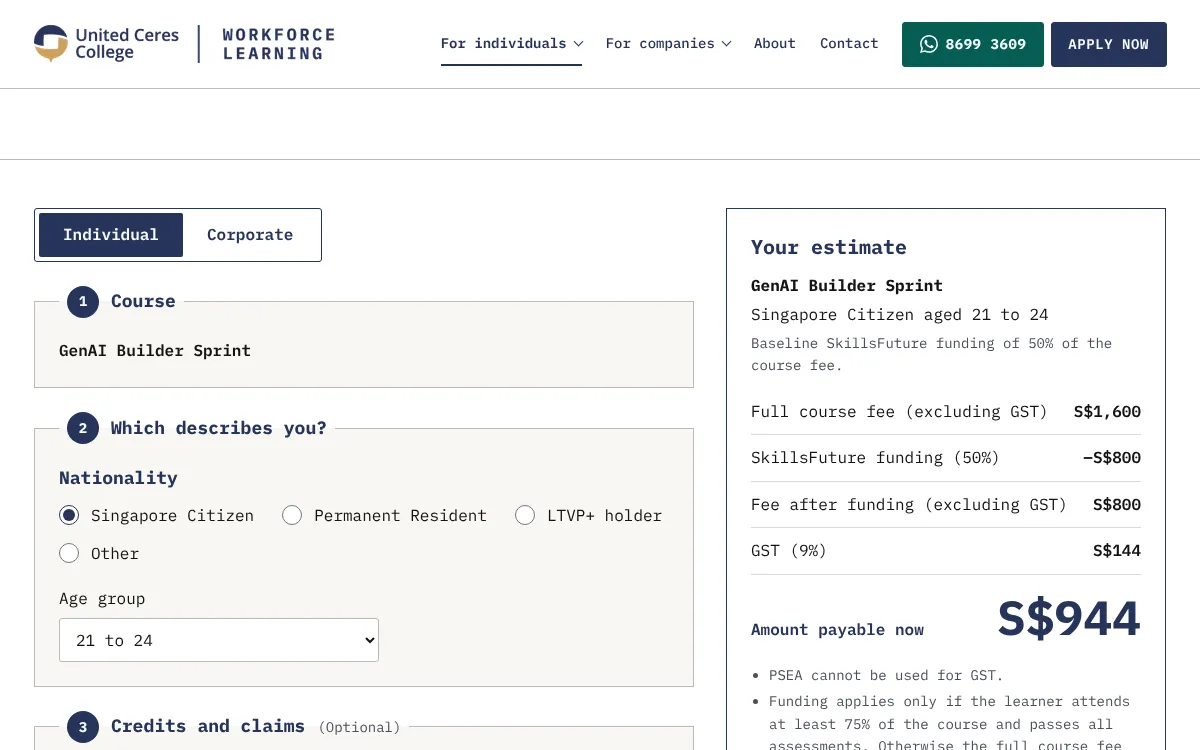
A structured training program, such as the one offered by United Ceres College, helps professionals build and deploy a simple generative AI application in two days. That kind of hands-on experience is invaluable. Participants learn not just the theory behind AI code generation, but also the practical steps of taking an AI-generated prototype and turning it into a reliable, maintainable application. They learn how to review code critically, how to test it, and how to deploy it safely.
Training also helps teams develop a shared vocabulary and set of practices. When everyone in the team understands what vibe coding is and what its limitations are, they can communicate more effectively. A developer can explain to a business analyst why a certain AI-generated solution needs to be reworked, and the analyst can understand the reasoning. That shared understanding reduces friction and makes the development process smoother.

What to Look for in an AI App Development Training Program
Not all training programs are created equal. The most effective ones combine three elements: a strong foundation in the underlying technology, practical hands-on exercises, and guidance on real-world deployment. Look for a program that covers the following areas:
- How large language models work and what they are good at, including their limitations
- Techniques for writing effective prompts that produce reliable code
- Methods for testing and validating AI-generated code, including unit tests and manual review
- Best practices for integrating AI-generated code into an existing application or workflow
- Security and ethical considerations, such as avoiding bias in outputs and protecting user data
A program that offers a certificate or a recognized credential can also be valuable, as it signals to employers that the participant has acquired a measurable skill. But the most important outcome is the ability to apply what was learned immediately on the job. A two-day classroom course, like the one offered by United Ceres College, is designed to deliver exactly that kind of practical knowledge.
The Role of the Developer Is Changing, Not Disappearing
Some people worry that vibe coding will make developers obsolete. That is unlikely. What it will do is change what developers spend their time on. Instead of writing repetitive boilerplate code, they will focus on architecture, code review, testing, and solving complex problems that AI cannot handle well. They will also spend more time training and guiding the AI tools themselves, fine-tuning prompts and curating the data that the models use.
For professionals who are not developers, vibe coding opens up new possibilities. A marketing manager can build a custom analytics dashboard. A supply chain analyst can create a tool that flags inventory issues. A human resources specialist can automate parts of the onboarding process. These people do not need to become software engineers, but they do need to understand enough about code to review and test it. That is the gap that AI app development training fills.
How to Get Started
If you are a professional who wants to stay ahead of this trend, the first step is to get some hands-on experience with an AI coding tool. Many of them offer free tiers or trial periods. Try generating a simple script or a small web page. See how it feels to ask for changes and watch the code update. Then, think about what you would need to learn to trust that code in a business setting. That is the kind of thinking that a good training course will build on.
For teams, the best approach is to start small. Pick a low-risk internal project, such as a reporting tool or a data processing script, and let a few team members experiment with vibe coding under supervision. Use the experience to develop your own guidelines and best practices. Then scale up as confidence grows. The key is to invest in training early, before the pressure to adopt these tools becomes overwhelming.
Vibe coding is not a fad. It is a genuine shift in how software gets built, and it is happening now. Businesses that prepare for it by investing in AI app development training will be able to move faster, innovate more, and give their teams the skills they need to thrive in a world where code is increasingly written by machines and guided by people.
United Ceres College on social media
 Twitter
 LinkedIn
 Facebook
 Instagram
 YouTube